



What are AI agents? If you’ve used ChatGPT or Claude, you’ve talked to an AI assistant — you ask, it answers. An AI agent goes further: you give it a goal, and it works toward it on its own — planning steps, using tools, browsing the web, and reporting back when it’s done.
In 2026, AI agents went from research demo to real product. Meta launched Muse, OpenAI shipped agentic modes in ChatGPT, Anthropic released Claude Cowork, and Microsoft and Google baked agents deep into their office suites. This guide explains what AI agents actually are, how they work, and whether you should care.
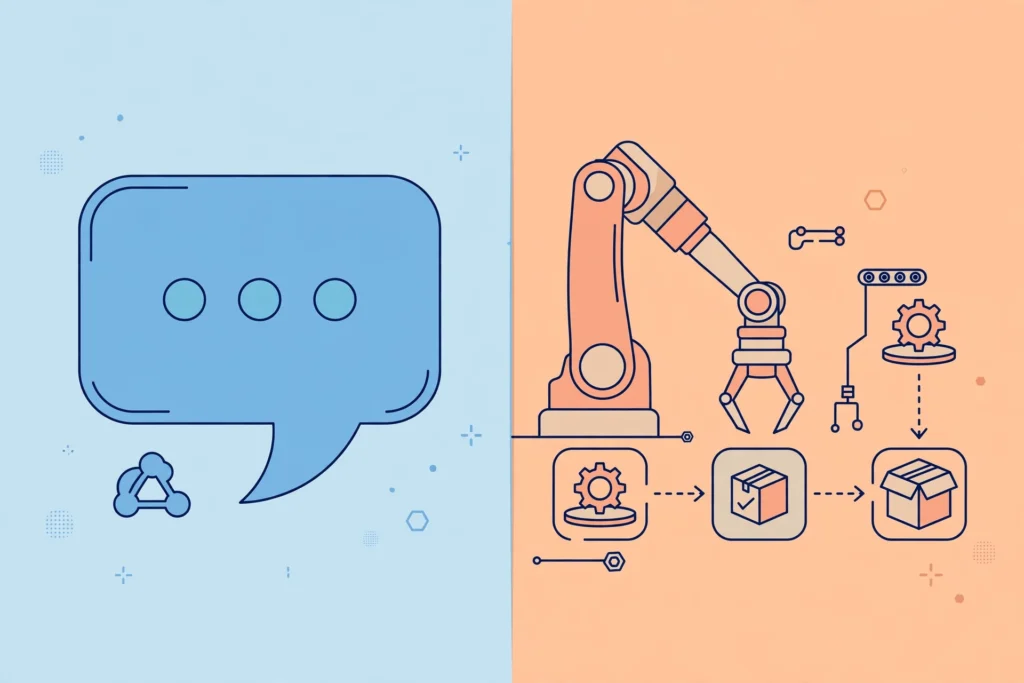
AI Assistant vs AI Agent: The Key Difference
The distinction is simple but important:
- AI assistant: “Summarize this document.” → It summarizes. One question, one answer, then it waits.
- AI agent: “Research the three best CRM tools for a 10-person team and email me a comparison by Friday.” → It searches the web, reads reviews, builds the comparison, and sends the email — possibly hours later, without you watching.
An assistant responds. An agent acts. Technically, agents combine a large language model with three extra ingredients: memory (it remembers what it has done), tools (web browsing, file access, code execution, app connections), and an action loop — it plans, acts, observes the result, adjusts, and repeats until the goal is done or it gets stuck and asks for help.
How AI Agents Actually Work
Under the hood, every AI agent runs the same loop:
Goal → Plan → Act → Observe → (repeat or report)
Say you tell an agent to “find me the cheapest flight to Dubai next month.” It breaks that into steps: search flight sites, compare dates and prices, check your calendar for conflicts, and present the top options. If a site blocks it, it tries another approach instead of giving up. If a step needs your approval — like actually booking — a well-designed agent pauses and asks.
This is why agents feel so different from chatbots: they’re persistent. Close the app and a good agent keeps working in the background, then notifies you when it’s finished.
Real AI Agents You Can Use in 2026
| AI Agent | Made By | Best For | Starting Price |
|---|---|---|---|
| ChatGPT Agent | OpenAI | General tasks, web research | $20/month (Plus) |
| Claude Cowork | Anthropic | Document work, research | Free tier; $20/month Pro |
| Meta Muse | Meta | Personal errands, goals | Free with limits |
| Microsoft Copilot agents | Microsoft | Office 365 workflows | Varies by plan |
| Gemini Agent Mode | Google Workspace users | $20/month (AI Pro) |
ChatGPT Agent is the easiest entry point if you already subscribe — it browses the web, handles files, and connects to apps like Gmail. Claude Cowork shines at long, complex work: deep research, organizing files, multi-step document tasks. Meta Muse is the most “personal assistant” of the bunch — it can book travel, monitor prices, fill forms, and remembers your preferences across sessions. Copilot and Gemini agents are the natural picks if your work already lives inside Microsoft 365 or Google Workspace.

What You Can Actually Do with AI Agents Today
Forget the hype — here are genuinely useful things agents do right now:
- Inbox triage: “Go through my unread emails, summarize the important ones, and draft replies to the rest.” Start with read-only summaries before letting it draft anything.
- Travel planning: “Plan a 4-day trip to Istanbul under $800 — flights, hotel, and a daily itinerary.” It compares options across sites instead of you opening twelve tabs.
- Research reports: “Compare the top 5 project management tools for remote teams and make me a one-page summary.” It reads review sites and docs you’d never have time for.
- Price monitoring: “Watch this laptop’s price and tell me when it drops below $900.” Set-and-forget, checked on a schedule.
- Meeting prep: “Pull together everything I need for tomorrow’s client call — their recent news, our last emails, open action items.”
The pattern: agents are best at multi-step chores — tasks with 5–20 steps that are individually simple but collectively eat your afternoon.
The Honest Downsides
Agents are powerful, which makes them risky. The trust problem is real:
- They can make confident mistakes at scale. An agent told to “clean up old files” might delete something important. An agent optimizing database queries could change production systems. The blast radius of an error is bigger than a wrong chatbot answer.
- Human approval still matters. The good agents pause before irreversible actions — sending emails, making purchases, deleting data. Never grant an agent unsupervised access to anything you couldn’t afford to lose.
- They’re not cheap at scale. Subscriptions run $20/month per tool, and heavy agentic usage can burn through API credits fast if you’re building your own.
- They get stuck. Vague goals produce vague results. “Do some marketing” will disappoint you; “draft three LinkedIn posts about our new feature from the launch notes” will not.
Rule of thumb: start with read-only tasks (research, summaries, monitoring), graduate to drafts you review, and only then let agents take supervised actions.
How to Start Using AI Agents
- Pick the one matching your ecosystem. Already on ChatGPT Plus? Start with ChatGPT Agent. Living in Google Workspace? Gemini. Microsoft shop? Copilot. Want a free taste? Claude’s free tier or Meta Muse.
- Begin with one recurring chore. Email triage, weekly research summaries, or price tracking — something you do often enough to feel the savings.
- Be specific. Agents reward detailed instructions: your tone, your constraints, what “done” looks like. Vague in, vague out.
- Review before you trust. Check the agent’s work for the first few runs. Most agents show an audit trail of what they did — read it.
- Build the habit. Agents pay off as routines (morning briefings, Friday follow-ups), not one-off experiments.

Frequently Asked Questions
Are AI agents the same as chatbots?
No. A chatbot answers one question at a time and then waits. An AI agent takes a goal, plans multiple steps, uses tools (web, files, apps), and works toward the goal — sometimes for hours — before reporting back.
Do I need to know coding to use AI agents?
Not at all. Consumer agents like ChatGPT Agent, Claude Cowork, and Meta Muse are used in plain language — you just describe what you want. Coding only matters if you want to build custom agents.
Are AI agents safe?
They’re as safe as the permissions you give them. Reputable agents ask for approval before sensitive actions (sending emails, purchases, deletions) and keep audit trails. The risk comes from granting broad access without supervision — so start narrow.
Will AI agents replace jobs?
They’re replacing tasks, not whole jobs — the repetitive multi-step work inside roles. The people benefiting most right now are those who delegate their drudge work to agents and spend the freed time on judgment, creativity, and relationships.
What’s the difference between AI agents and “agentic AI”?
They’re the same idea — “agentic AI” is just the industry term for AI systems that act autonomously toward goals. You’ll see both phrases; they mean the same thing.
The Bottom Line
AI agents are the most important shift in how we use AI since chatbots themselves. The leap from “ask and answer” to “delegate and done” is real, the products are here, and the technology improves every few months.
You don’t need to rebuild your workflow around them today. But pick one recurring chore, hand it to an agent this week, and you’ll understand — faster than any article can explain — why everyone in tech is betting this is the future.



[…] to run locally instead of always calling the cloud. I broke down how those agents work in my beginner’s guide to AI agents, and an AI PC is exactly the kind of machine built to run them […]
[…] or a new piece of code. The reality is rooted in human creativity and identity, not in the AI agents that currently dominate search results with nonsensical […]
[…] waiting is perfectly sensible. The pattern is similar to other recent tech shifts covered in our beginner guide to AI agents: the best upgrade is the one that solves a problem you actually […]