


Why this name keeps confusing people
Search for “fappelo” and you will get two completely different stories.
One set of pages describes a polished creator platform, where artists upload work, build a following and sell subscriptions. Another set talks about leaked photos, mirror sites and sketchy pop-ups. Both cannot be right, and that gap is why people land on articles like this one. They searched a name they heard somewhere, and the results made things murkier, not clearer.
Here is the short version first. The name Fappelo, and the near-identical spelling Fapello, is mostly known as a media aggregation site tied to reposted creator content, not as a normal social platform where creators sign up and post their own work. Most of the glowing “creator platform” descriptions floating around do not match what the name is actually known for.
That mismatch matters. If you are deciding whether a site is safe to open or legal to use, you need the real picture, not the copy-paste one.
What the name actually refers to
Fappelo is best understood as an aggregation site: it collects media from elsewhere and presents it in one place. In this case the material is photos and videos said to come from paywalled creator services, the sort of content fans normally pay to see where creators sell subscriptions. It circulates on Fappelo style sites without clear permission from the people who made it.
That one detail changes how the site should be judged.
A real creator platform has accounts, uploads, payouts, moderation and some public link back to the creators themselves. Fappelo is not known for any of that. No creator community posting there by choice, no official app in the major app stores, no support channel you could point to. What the name is known for is the opposite: content appearing without a visible connection to the person in it.
Then there are the mirror domains. Sites under this name have shown up on different domain endings over time, including a .su address, and new mirrors appear when older ones vanish. Legitimate services rarely hop between domains like that. It is usually a sign of takedown pressure, hosting trouble, or both. The same pattern shows up with pirate streaming sites, and we have covered it before in our look at Voddler and the history of a shut-down streaming service.
One more point gets lost in the noise. Mirrors copy each other and change hands, so “the site” is not always the same operation from month to month. Two mirrors with the same name can give you different experiences, one merely unpleasant and the other risky.
So why do so many posts call it a creator platform?
This part is less sinister than it looks, and also less reliable.
A lot of low-effort websites publish short articles about trending search terms. They do not research the term. They copy whatever the first few results say, rewrite it slightly, and add confident details nobody checked: a drag-and-drop editor, monetization tools, a friendly community. The features sound plausible because they are borrowed from real platforms. The next site copies them, and within a few months the made-up description outnumbers the accurate one.
Some of these pages exist to farm ad clicks or funnel readers somewhere else entirely. A few are about a different product with a similar name and get tangled into the same results.
The takeaway is simple. When ten articles describe a site in the same shiny words but none link to an actual company, a help page, or a real creator who uses it, treat the description as filler. We ran into the same problem doing a legitimacy audit of another little-known web property: big claims, thin evidence, nothing verifiable behind the words.
The risks are the practical part
Strip away the naming confusion and the reasons to be careful are concrete.
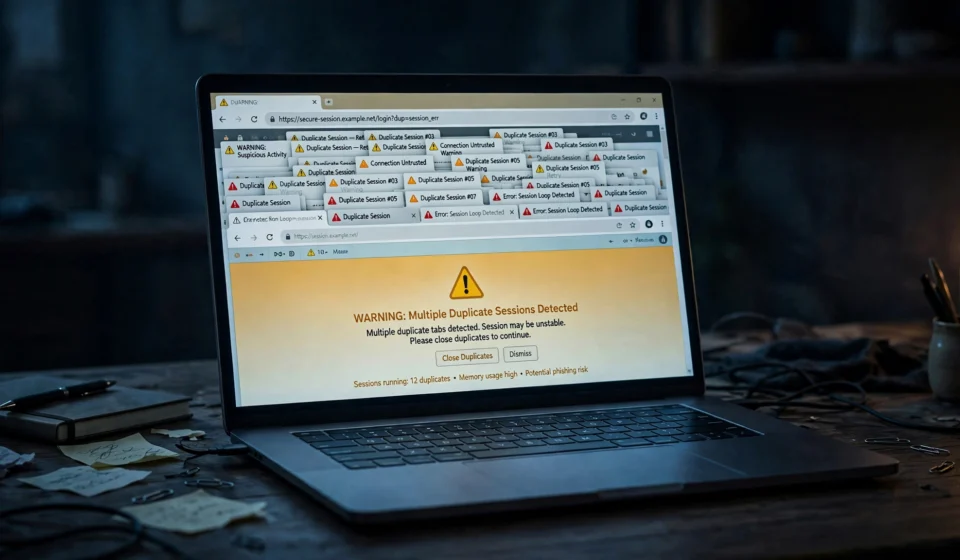
Ads and redirects. Sites in this corner of the internet run aggressive advertising, because mainstream ad networks will not touch them. That means pop-ups, fake download buttons, redirects to unrelated pages, and the occasional tab that tries very hard to install something. Mirrors are worse, since a copy of a copy has even less accountability. A redirect to a malware-laced page is not a rare edge case on mirrors. For the shadiest ones it is part of the business model.
Your own device and accounts. Even if nothing installs, these sites are a common stop on the road to phishing pages and push-notification spam. Clicking “allow” on the wrong prompt can mean weeks of junk notifications. The site does not have to be cartoonishly evil for this. It just has to be careless with its ad partners, and sites living under takedown pressure are rarely careful.
Copyright and consent. This is the bigger issue, and it is not about your antivirus. In many cases the material was posted by subscribers who took it from behind a paywall and shared it onward without the creator’s say-so. Viewing it is one thing legally, and the law differs by country, but downloading and especially resharing it puts you on thinner ice. For the creator, the harm is not abstract. Paid work handed out for free is income gone, and many creators describe these leaks as a consent violation, because they chose who could see the material and on what terms.
Payment traps. Some mirrors ask for card details for “verification” or a “premium” tier. There is no trustworthy company behind the charge, no refund desk, no one to call. Handing payment details to a site that hides behind rotating domains is a bad bet.
The risk here is not one big danger. It is several medium ones stacked together, all to access material that somebody else made and did not agree to give away.
The legitimate route is simpler
If the goal is to see a particular creator’s work, the honest route still exists and it is not complicated. Creators sell subscriptions on their official pages, on the well-known platforms where they control pricing, access and takedowns. Paying there means the money reaches the person who made the work, not whichever ad network a mirror happens to run.
Plenty of creators also post free material on their public social accounts. Following those is a reasonable middle path if you do not want a subscription.
This section is short because there is not much to argue about. The official channel is the version where nobody’s work is taken and nobody’s laptop gets infected in the process.
Frequently asked questions
Is Fappelo safe?
Not in the way a normal website is safe. The name is tied to aggregation and mirror sites, and mirrors in this category are known for aggressive ads, redirects and occasional malware attempts. The operator is anonymous and the domain can change, so there is no accountability if something goes wrong. The cautious answer is to stay away, especially on a device with your main accounts signed in.
Is Fappelo legal?
The site model raises real legal problems, because the material is widely reported to be reposted from paywalled services without the creators’ permission, a copyright issue for the operator. For visitors the law depends on the country, but downloading and resharing leaked material is where personal risk grows. If you have to ask whether a use is legal, that uncertainty is itself a sign to skip it.
Is there an official Fappelo app?
No official app in the major app stores is publicly tied to the name. Treat any app file offered on a mirror or a random download page with suspicion. Installing software from anonymous mirror sites is a common way people pick up malware, and an unofficial app skips the checks app stores provide.
Why are there so many different Fappelo sites?
Because mirrors multiply. When a domain gets taken down, blocked or abandoned, copies appear on new domains, sometimes run by the same people and sometimes by imitators chasing the traffic. Two mirrors with the same name may not be the same operation at all.
Is Fappelo a social media platform?
No, not in any normal sense. No known creator community posting by choice, no profiles fans follow the way they would on a social network, and no sign the people whose material appears there chose to be there. Articles calling it a social platform with creator tools are repeating the copy-paste version, not the documented one.
A last word
Fappelo is a neat case study in how the internet describes itself badly. A name gets attached to leaked and reposted material, mirrors scatter across domains, and an army of filler articles insists it is something respectable. Strip the filler away and the story is plain: an aggregation name with real safety and copyright problems, and no good reason for most people to go near it.